HPC Data Symphonies
2026
Type
Interactive Art
Credits
HLRS
S+T+ARTS EC(H)O, European Union
FACTS
HPC Data Symphonies
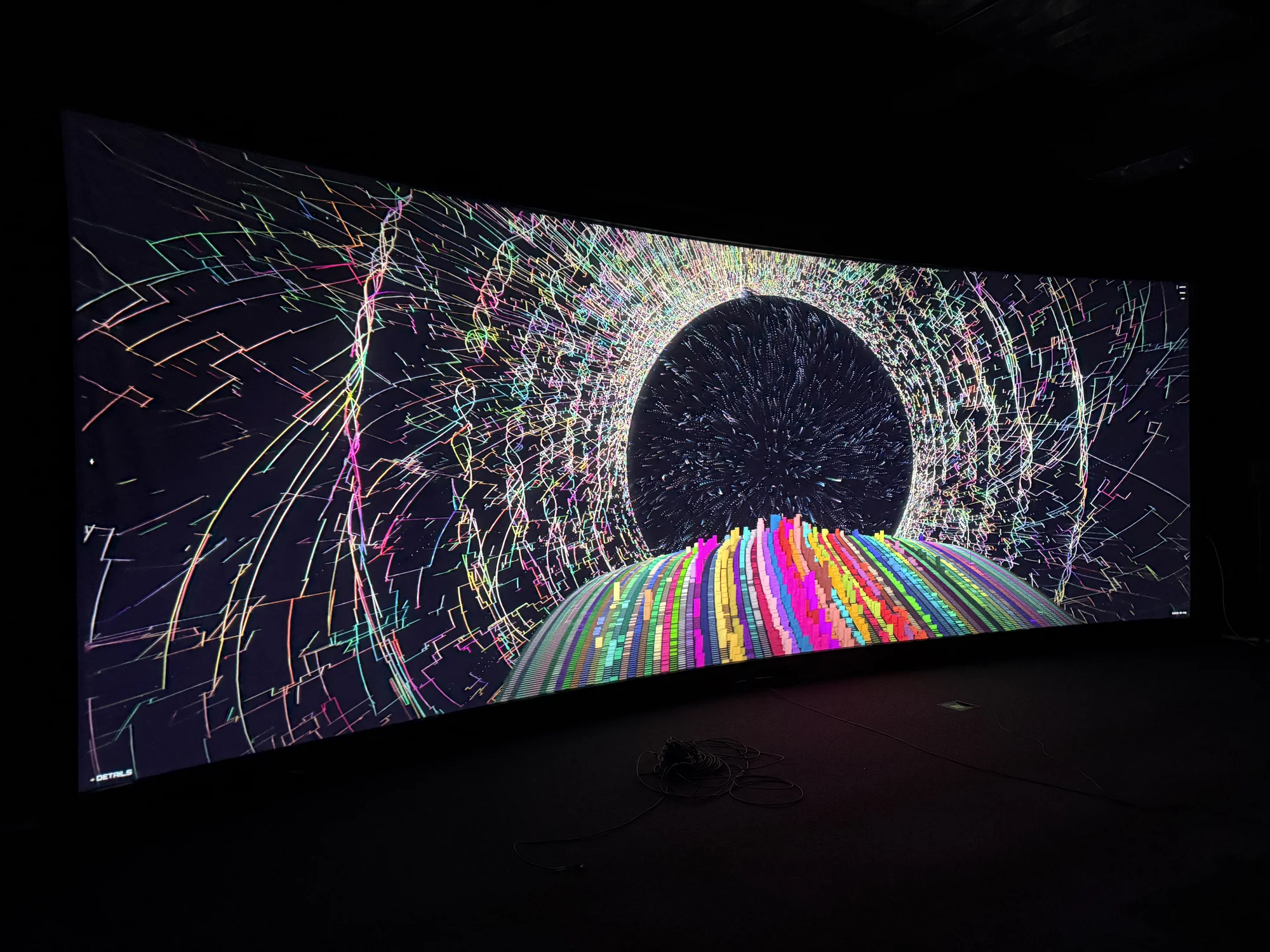
An immersive data artwork translating the invisible labor of supercomputing into a living visual landscape.
What does it feel like to witness a supercomputer thinking?
Every day, thousands of researchers send jobs to one of Europe's most powerful supercomputers at HLRS in Stuttgart. Climate models that run for weeks. Proteins folding in simulated time. Fluid dynamics. Astrophysics. Turbulence computed at scales we can't see with our eyes. It all happens silently. Rows of machines humming behind closed doors. Invisible.
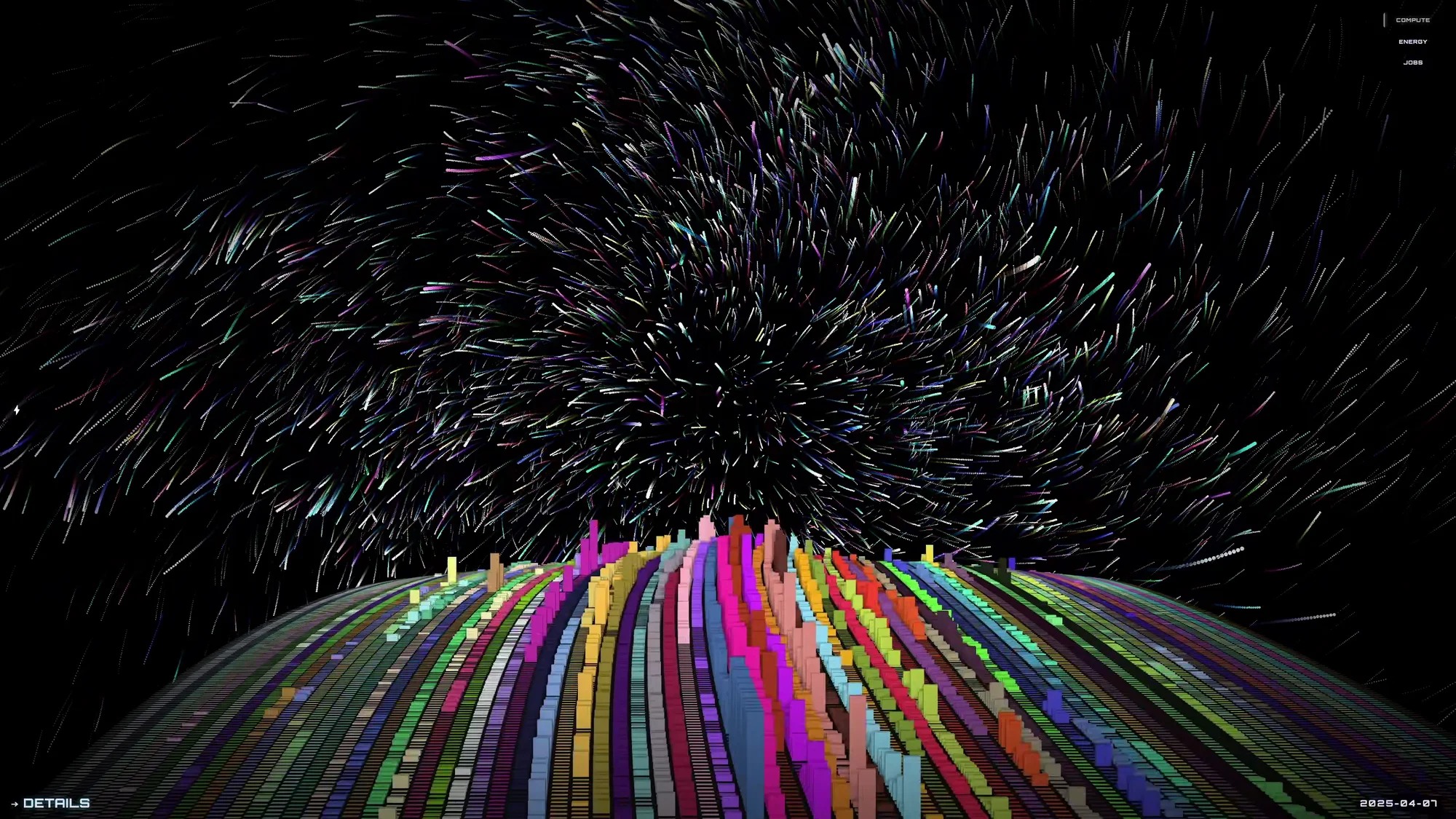
This artwork makes that invisible labor visible. Not as numbers or dashboards, but as a living landscape with forms that grow, pulse, and shift with the rhythms of the machine.
The Human-Scale Translator
A connected bike sits at the center of the installation. You pedal. Your effort maps against the supercomputer's daily output. A minimal overlay shows the gap: how many years of continuous pedaling would equal today's computation? How many thousands of cyclists working together? Datacenters are hungry for energy. The bike makes that abstraction physical. You feel in your legs what it means to run a climate simulation. Numbers appear on screen, but the experience lives in your body. You understand scale before you read about it. What does it mean to consume this much energy, invisibly, continuously, in service of science?
Installation Modes
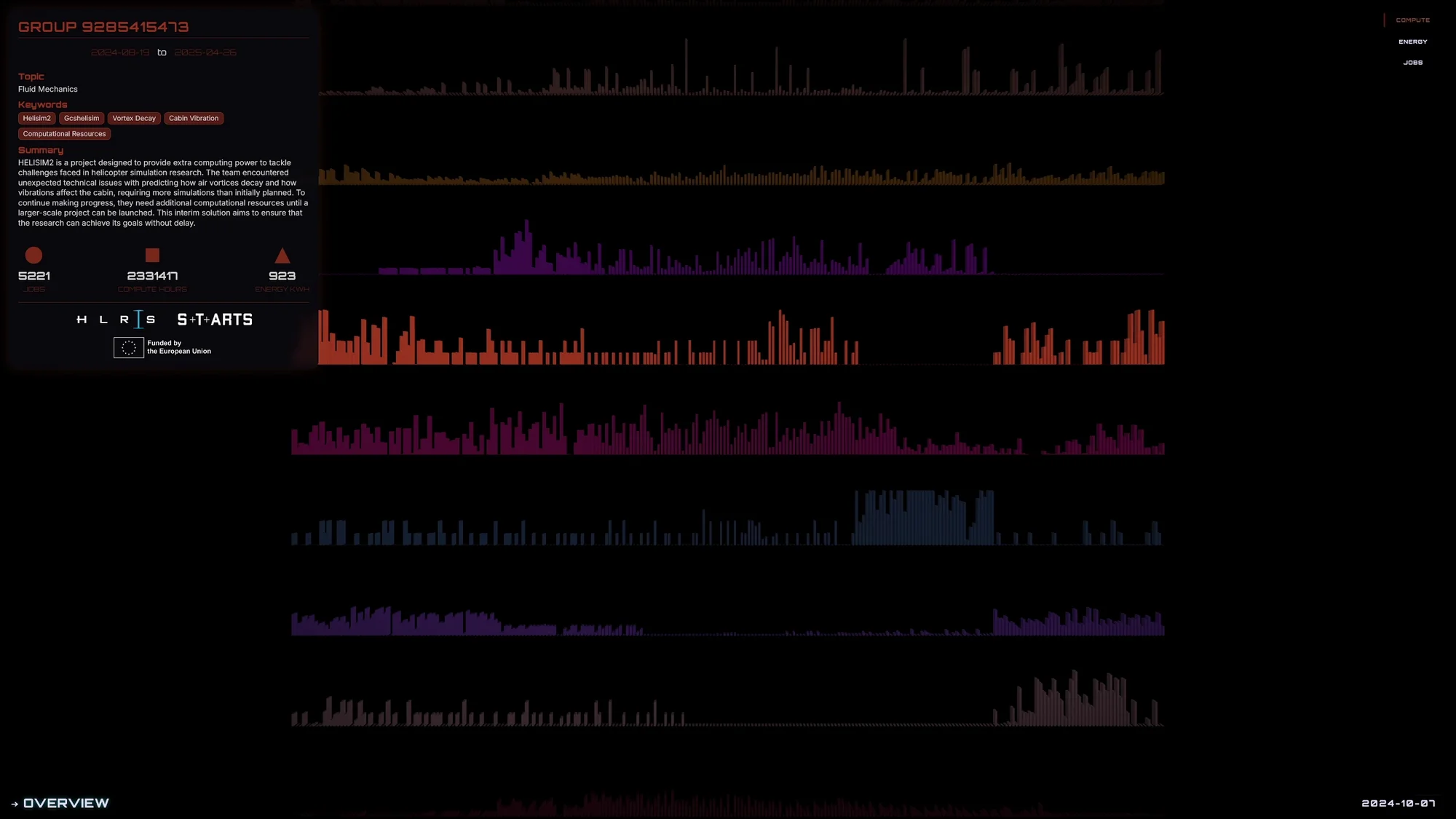
Interactive screen: Navigate through time and scientific domains with simple gestures. The piece responds, reveals structure as attention deepens.
Ambient mode: When idle, the visualization keeps evolving. A living backdrop.
LED installation: Data rhythms drive architectural lighting through Art-Net.
Bike integration: Physical effort connected to computational scale via Bluetooth.
Technical
- Python data pipeline running on HLRS infrastructure, processing millions of log entries into daily snapshots
- Real-time WebGL visualization built with cables.gl
- Custom GLSL shaders for procedural organic forms
- Adaptive rendering that scales from exhibition displays to laptops
Context
Developed during a year-long S+T+ARTS EC(H)O residency at HLRS Stuttgart in 2025. The European Commission funds S+T+ARTS to bring artists into scientific and technological institutions.
The challenge: translate supercomputer activity for public audiences without using dashboard language, without reducing computation to spectacle. The result sits between art and explanation. It invites contemplation rather than demanding comprehension.
Public presentation at HLRS theGATE festival, May 2026.
Related blog posts
No items found.
Related works
No items found.
